Introduction
Missing a car insurance payment can happen to anyone. Life gets busy, bills pile up, and sometimes a due date slips your mind. Many drivers wonder how late they can pay car insurance without losing coverage or facing penalties. This question is important because even a short gap in insurance can lead to serious financial risks and legal trouble in many U.S. states.
In this guide, you’ll learn how late payments work, what a grace period means, what happens if you miss the deadline, and how to protect yourself from policy cancellation. Everything is explained in simple terms so beginners can understand and make confident decisions.
What Is How Late You Can Pay Car Insurance?
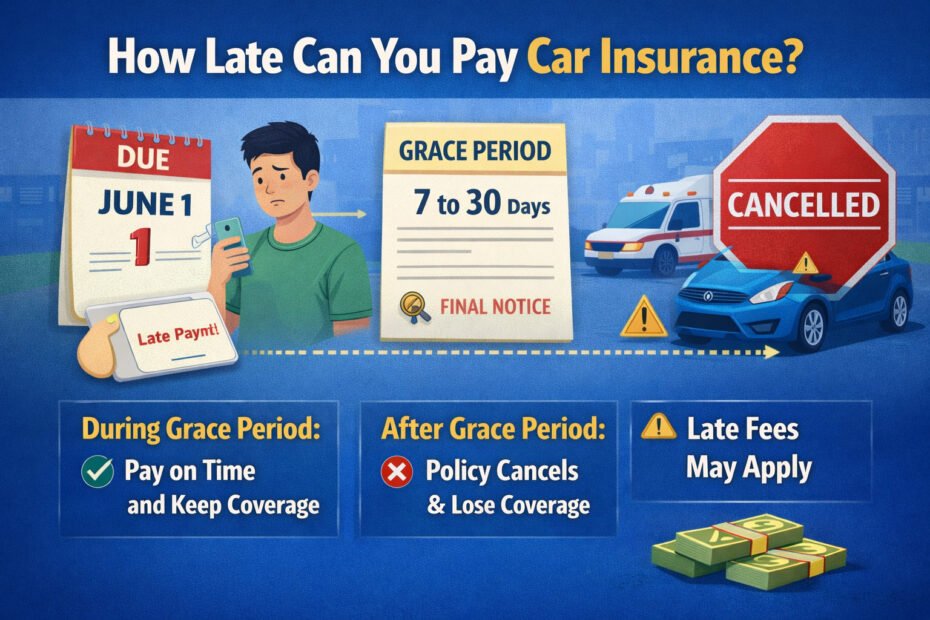
“How late can you pay car insurance” refers to the amount of time you have after your payment due date before your insurance company cancels your policy.
Most insurance companies do not cancel coverage immediately. Instead, they usually offer a grace period, which is extra time to make your payment.
Key points to understand:
- A payment due date is the day your bill must be paid.
- A grace period is extra time allowed after the due date.
- Coverage may continue during this period, depending on the insurer.
- If payment is not made, the policy can lapse or cancel.
Grace periods vary by company and state rules, but they commonly range from 7 to 30 days.
Do You Know What is How Does Car Insurance Work When You Are at Fault?
How Does How Late You Can Pay Car Insurance Work?
Here is a simple step-by-step explanation of what usually happens:
1. Payment Due Date Arrives
Your insurer sends a bill with a specific due date. Payment is expected by this day.
2. Missed Payment Notice
If you do not pay on time, the company sends a reminder or late notice. Some companies also charge a late fee.
3. Grace Period Begins
During the grace period:
- Your policy may remain active.
- You still have time to pay.
- You may avoid cancellation if payment is made quickly.
4. Warning of Cancellation
If payment is still not received, the insurer sends a cancellation notice with a final deadline.
5. Policy Cancellation or Lapse
If you miss the final deadline:
- Coverage stops.
- You may be uninsured.
- Restarting coverage may cost more.
Each insurer handles timing differently, so checking your policy details is important.
Real-Life Example
Imagine Sarah pays $120 per month for car insurance. Her payment is due on June 1.
- She forgets to pay.
- Her insurer offers a 10-day grace period.
- On June 5, she receives a reminder email.
- On June 9, she pays the bill.
Because she paid within the grace period:
- Her coverage continues.
- No policy cancellation occurs.
- She only pays a small late fee.
Now imagine she waits until June 20:
- The policy cancels on June 12.
- She drives uninsured for several days.
- When she reapplies, her premium increases to $150 per month.
This example shows how timing directly affects cost and protection.
Why Is How Late You Can Pay Car Insurance Important?
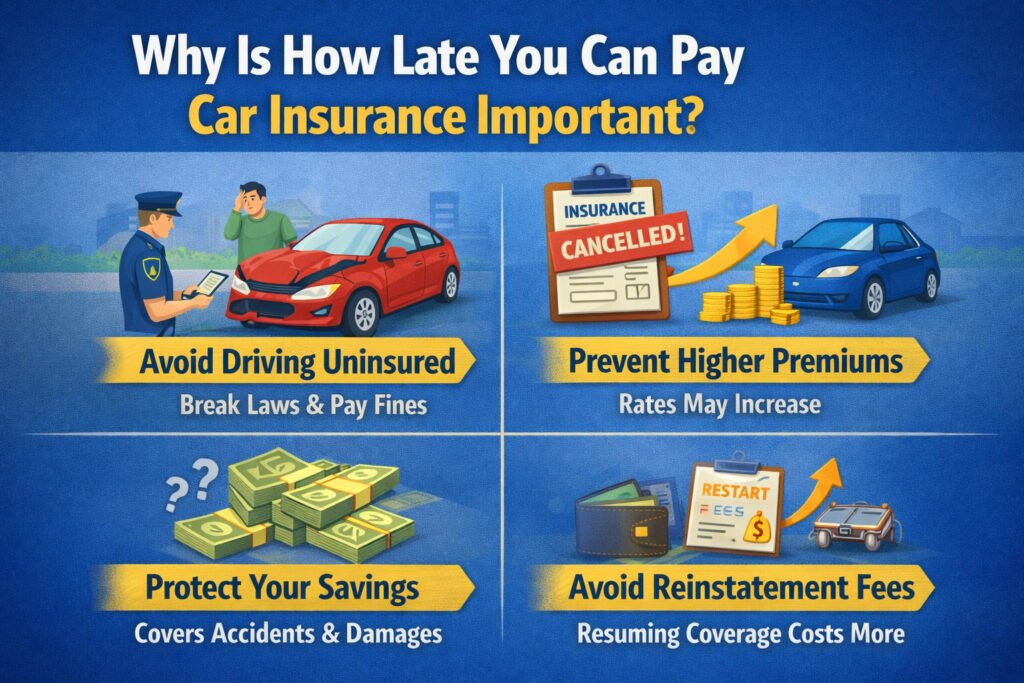
Table of Contents
Table of Contents
Understanding payment deadlines helps protect both your finances and your legal safety.
Here’s why it matters:
- Avoid driving uninsured: Most states require active insurance.
- Prevent higher premiums: Lapses often lead to increased rates.
- Maintain continuous coverage: Insurers reward consistent payment history.
- Avoid reinstatement fees: Restarting a policy may cost extra.
- Protect savings: Insurance helps cover accidents and damage.
Even a short lapse can create long-term consequences, so knowing your payment window is valuable.
Pros and Cons of Late Payment Grace Periods
Pros
- Gives extra time during financial stress.
- Prevents immediate cancellation.
- Helps drivers avoid coverage gaps.
- Provides flexibility for unexpected situations.
Cons
- Late fees may apply.
- Coverage rules during grace periods can vary.
- Repeated late payments may increase risk level.
- Missing the final deadline leads to cancellation.
Grace periods are helpful, but they should not be relied on regularly.
Common Mistakes People Make
Many drivers misunderstand how late payments work. Here are common mistakes:
- Assuming coverage lasts forever: Grace periods are limited.
- Ignoring warning notices: Emails and letters often include final deadlines.
- Waiting until cancellation day: Processing delays can still cause lapses.
- Believing reinstatement is automatic: Some insurers require a new policy.
- Forgetting automatic payments expire: Card changes can stop billing.
Staying aware of payment dates prevents most problems.
Frequently Asked Questions (FAQs)
Can I drive during the grace period?
Often yes, but it depends on your insurer. Some companies keep coverage active, while others limit protection.
Will my insurance rate increase if I pay late?
One late payment may not affect rates, but repeated late payments or a lapse can raise premiums.
What happens if my policy cancels?
You may need to buy a new policy, pay higher rates, and possibly show proof of insurance to your state.
Can I reinstate my insurance after cancellation?
Sometimes yes, but only within a short time. After that, you may need to start a new policy.
Conclusion
So, how late can you pay car insurance? In most cases, you have a grace period of several days or weeks after the due date, but this extra time is limited. Missing the final deadline can lead to policy cancellation, higher costs, and serious risks if you drive without coverage.