Introduction
When you apply for car insurance, one of the first details an insurance company asks for is your home address. Many drivers wonder why this information matters and how insurers actually confirm it. Address verification is an important part of the insurance process because where you live can affect your premium, coverage options, and risk level.
Understanding how car insurance companies verify addresses helps you avoid delays, pricing issues, or policy problems later. In this article, you’ll learn what address verification means, how insurers check your information, and why providing accurate details is essential.
Table of Contents
Table of Contents
What is how do car insurance companies verify address?
Address verification is the process insurance companies use to confirm that the location you provide is correct and truly connected to you and your vehicle.
Insurance providers check addresses because risk levels vary by location. For example, areas with heavy traffic or higher theft rates may have higher premiums.
Common information insurers review includes:
- Your residential address
- Mailing address (if different)
- Where the vehicle is usually parked overnight
- Driver records connected to that location
The goal is not to invade privacy but to make sure pricing and coverage are accurate.
Do you know what is how can I sell a car insurance
How does how do car insurance companies verify address work?
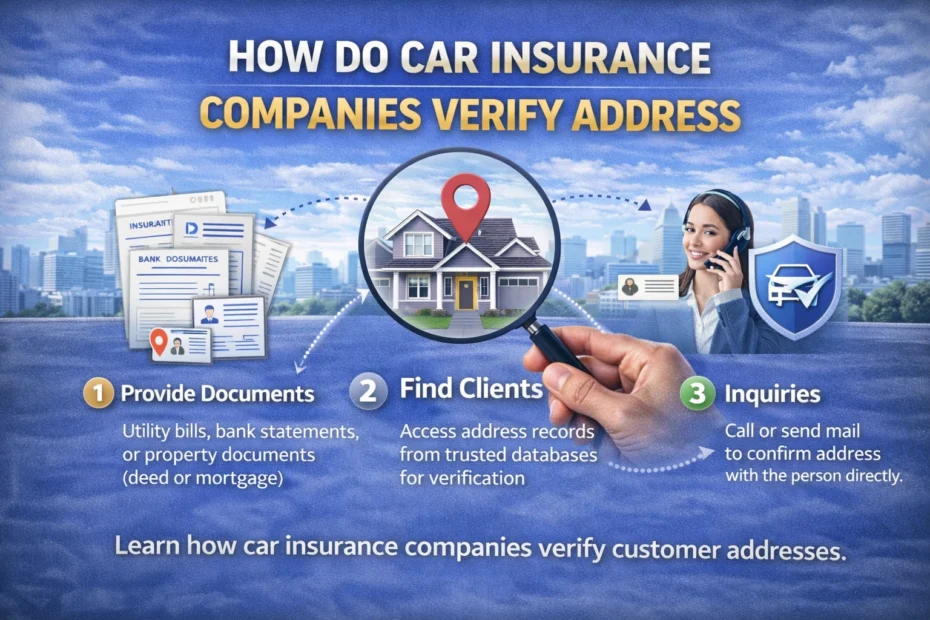
Insurance companies use several steps to confirm your address.
- Application review
When you apply, you enter your address along with personal and vehicle details. - Database matching
Insurers compare your address with public and commercial databases, such as postal records and credit header data. - Driving record check
Your driver’s license information often includes your registered address, which insurers review. - Vehicle registration verification
Companies may compare your address with state vehicle registration records. - Document request (if needed)
If something doesn’t match, the insurer may ask for proof like:- Utility bills
- Lease agreements
- Bank statements
- Ongoing monitoring
Some insurers periodically review records to confirm the vehicle location has not changed.
This process usually happens quickly and often without the customer noticing.
Real-life example
Imagine John applies for car insurance and lists his address in a quiet suburban area. The quote he receives is $120 per month.
During verification, the insurer notices his vehicle registration shows a different city with higher accident rates. They ask John to confirm where the car is mainly kept.
John explains he recently moved and provides a utility bill showing his new address. After verification, the insurer updates the policy and keeps the original price.
Without verification, pricing could have been inaccurate or the policy delayed.
Why is how do car insurance companies verify address important?
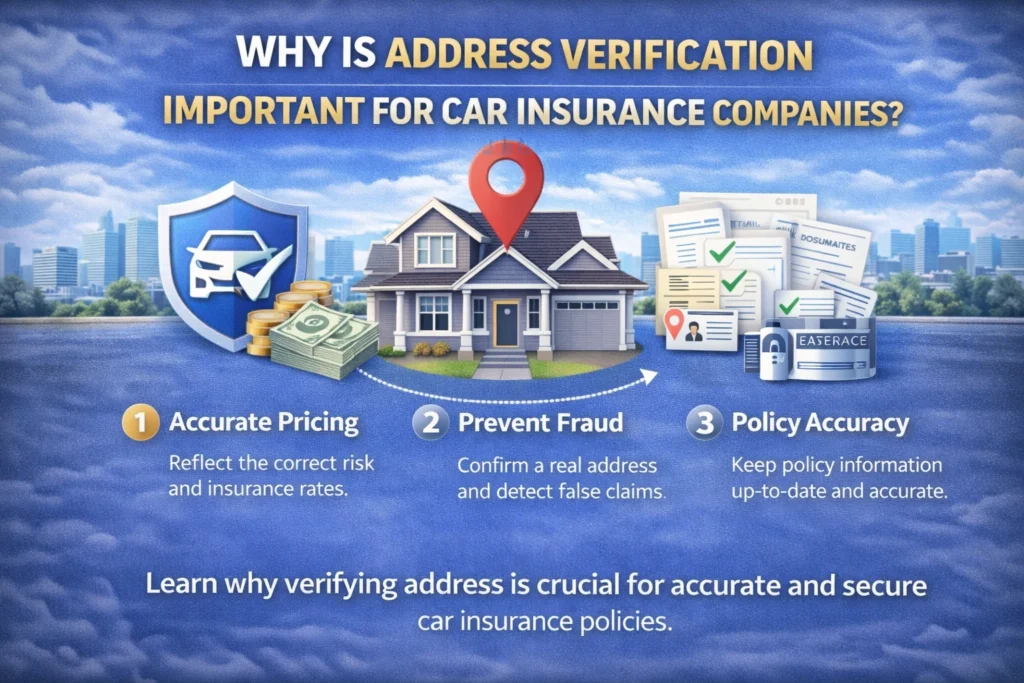
Address verification protects both the insurer and the customer.
Here’s why it matters:
- Accurate pricing based on local risk factors
- Fair premiums for all drivers
- Fraud prevention by reducing false address claims
- Correct coverage eligibility depending on state rules
Providing the right address helps prevent claim problems later. If information is incorrect, a claim review may take longer or require extra checks.
Pros and cons of how do car insurance companies verify address
Pros
- Ensures fair insurance pricing
- Helps prevent fraud
- Reduces policy errors
- Protects honest customers
Cons
- May require extra documents
- Can delay policy approval if information differs
- Some people feel the process is detailed
Overall, verification helps maintain trust and accuracy in the insurance system.
Do you know How Sell Car Insurance? A Beginner-Friendly Guide in 2026
Common mistakes people make
Many drivers misunderstand how address verification works. Common issues include:
- Using a cheaper address intentionally
This can cause policy cancellation or claim complications. - Forgetting to update after moving
Even small location changes can affect coverage. - Listing a mailing address instead of residence
Insurers need the location where the car is normally kept. - Assuming verification never happens
Companies often check information automatically.
Being honest and updating details quickly helps avoid problems.
Frequently asked questions (FAQs)
Do insurance companies really check your address?
Yes. Most insurers verify addresses using databases and official records.
Can my premium change after verification?
Yes, if the confirmed location has different risk factors.
What proof of address might be required?
Utility bills, lease agreements, or official mail are commonly accepted.
What happens if my address is wrong?
The insurer may request corrections, adjust pricing, or pause coverage until verified.
Conclusion
Car insurance companies verify addresses to ensure policies are accurate, fairly priced, and based on real risk factors. While the process may seem technical, it mainly involves checking records and confirming where your vehicle is actually located.