Introduction
Filing a home insurance claim can feel stressful, especially when you are already dealing with damage to your home. It can be even more upsetting to learn that your home insurance claim was denied. Many homeowners feel confused, frustrated, and unsure about what to do next.
A denied claim does not always mean the end of the road. There are steps you can take to understand the reason, fix problems, and possibly get your claim approved. In this guide, you’ll learn why claims get denied, how the process works, what actions to take, and how to avoid similar issues in the future.
Table of Contents
Table of Contents
What is a denied home insurance claim?
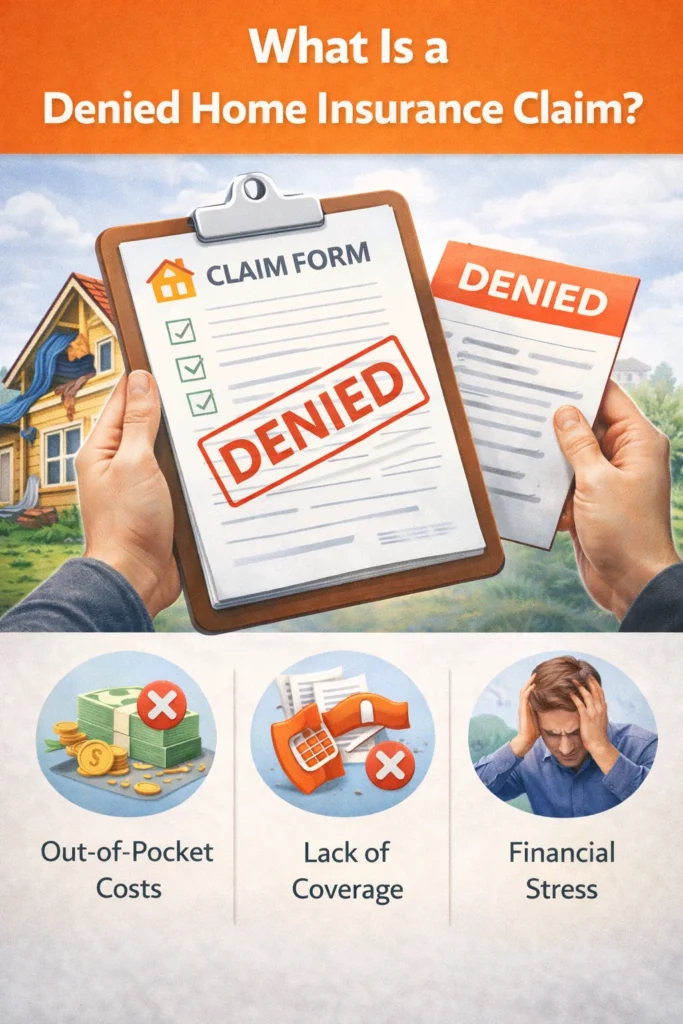
A denied home insurance claim happens when your insurance company decides not to pay for the damage or loss you reported.
This usually means the insurer believes:
- The damage is not covered under your policy
- The claim does not meet policy conditions
- There is missing or incorrect information
- The damage happened before the policy started
A denial is not always personal. Insurance companies follow the rules written in your policy. If the damage or situation falls outside those rules, they may refuse payment.
Common reasons for denied home insurance claims include:
- Damage caused by floods or earthquakes (often not covered by standard policies)
- Lack of maintenance, such as a long-term roof leak
- Filing the claim too late
- Not having enough documentation
- Policy exclusions you didn’t know about
Understanding why the claim was denied is the first step toward fixing the problem.
Do you know what is mean by AOB in Home insurence?
How does a home insurance claim denial work?
Here is a simple step-by-step look at how a claim can end up being denied.
- You report damage to your insurance company.
- You submit details, photos, and other documents.
- An adjuster investigates the claim.
- The insurance company compares the damage to your policy coverage.
- If they believe the loss is not covered, they send a denial letter.
The denial letter usually explains:
- The reason for denial
- The specific policy section they are using
- What information they reviewed
This letter is important. It tells you exactly why the insurer refused to pay and helps you decide what to do next.
If you disagree with the decision, you can take further action, such as asking for a review or filing an appeal.
Do you know what are the common home insurence mistakes?
Real-life example
Let’s say Daniel has homeowners insurance. After a heavy rainstorm, he notices water damage in his basement and files a claim.
The insurance company investigates and finds that:
- Water entered through cracks in the foundation
- The issue had been developing over time
- The policy excludes flood and ground water damage
Daniel receives a letter saying his claim is denied because the damage was caused by groundwater, which is not covered under his standard homeowners policy.
Daniel feels frustrated, but now he understands the reason. He reviews his policy and learns he may need separate flood insurance in the future. He also considers asking if any part of the damage, like interior wall repairs, could still be covered.
This example shows that denial often comes down to policy limits, not always mistakes.
Why is understanding a denied home insurance claim important?

Knowing what to do after a claim denial can save you money and stress.
It helps you:
- Understand your policy better
- Avoid making the same mistake again
- Spot possible errors in the denial
- Protect yourself in future claims
If you simply accept the denial without checking details, you might miss a chance to correct an error or provide more proof. Sometimes claims are denied because of missing documents or unclear information, which can be fixed.
Understanding the reason also helps you adjust your coverage so you are better protected going forward.
Do you know what are the home insurence adjuster-secret-tactics?
Pros and cons of challenging a denied claim
Pros
- You may get your claim approved after review
- You can correct errors or missing details
- You learn more about your coverage
- It may lead to better protection in the future
Cons
- The process can take time
- You may need to gather more documents
- There is no guarantee the decision will change
- It can feel stressful or overwhelming
Even with the downsides, reviewing a denial is often worth the effort, especially for large losses and if you want so more information about to deal with denied claims you can read homeowners insurance claim denied? Here’s what to do next
Common mistakes people make when Insurance Claim Denied
Many homeowners make simple mistakes after a claim is denied. Avoiding these can improve your chances of a better outcome.
1. Not reading the denial letter carefully
The letter explains the reason. Skipping it can lead to confusion and missed details.
2. Giving up too quickly
Some denials are based on missing information, not final decisions.
3. Not keeping records
Photos, repair estimates, and receipts are important if you want a review.
4. Waiting too long to respond
Insurance policies often have time limits for appeals or additional information.
5. Getting repairs without documentation
Fixing damage before the insurer sees it can make it harder to prove your loss.
Frequently asked questions (FAQs)
Can I appeal a denied home insurance claim?
Yes, many insurance companies have an appeal or review process. You can ask them to take another look and provide more information.
Should I hire a professional for help?
Some homeowners choose to speak with a public adjuster or attorney, especially for large claims. Make sure you understand any costs before hiring help.
Will a denied claim affect my future insurance?
A denied claim may still be on record, but it usually has less impact than a paid claim.
How can I prevent future claim denials?
Review your policy, maintain your home, document damage quickly, and consider extra coverage for risks like floods or earthquakes.
Conclusion
Having a home insurance claim denied can feel discouraging, but it does not mean you are out of options. By understanding the reason for the denial, reviewing your policy, and gathering strong documentation, you may be able to request a review or improve your coverage for the future.
The key is to stay informed, act quickly, and keep clear records. Learning from a denied claim today can help you avoid bigger problems and financial stress down the road.