Introduction
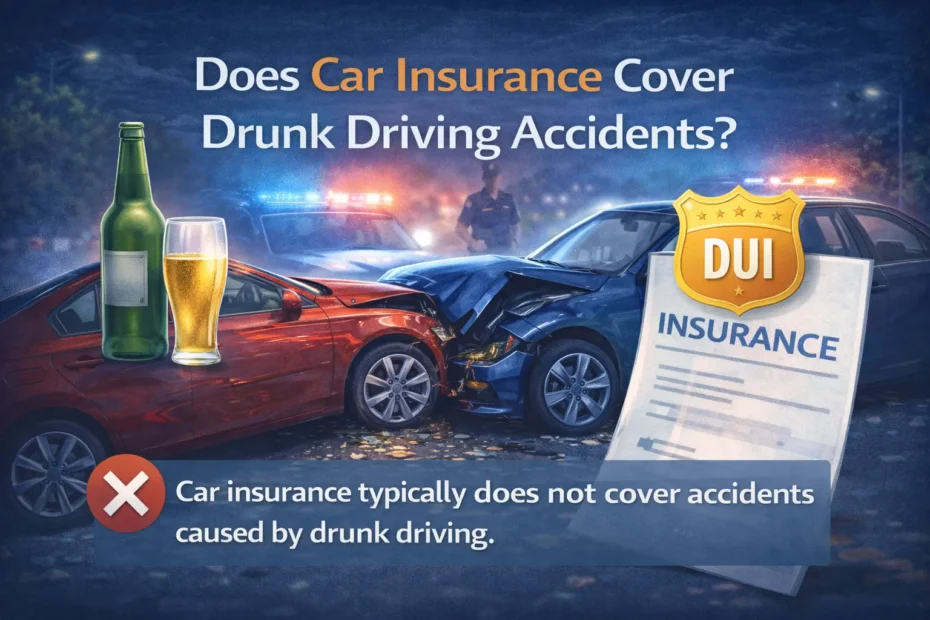
If you are a driver in the United States, you know that a split-second decision can change your life forever. When that decision involves getting behind the wheel after drinking, the consequences are often catastrophic. Beyond the immediate safety risks and legal penalties, a major question often arises: Does car insurance cover drunk driving accidents?
The answer is more nuanced than a simple yes or no. In the US, insurance is designed to protect against “accidental” damage caused by negligence. While driving under the influence (DUI) is a criminal act, the resulting crash is usually classified as an accident in the eyes of an insurance provider. However, whether the insurance company pays out—and who they pay—depends on your specific policy, state laws, and whether you were the at-fault driver or the victim.
How Liability Insurance Works in a DUI Accident
In almost every state, drivers are required to carry liability insurance. This coverage is divided into two parts: Bodily Injury Liability and Property Damage Liability.
Coverage for the Victim
If a drunk driver hits you, their liability insurance is generally required to pay for your damages. This is because liability insurance exists to protect third parties from the policyholder’s negligence. Even though the driver committed a crime by driving drunk, the insurance company typically cannot refuse to pay the victim’s medical bills or car repairs up to the policy limits.
Coverage for the Drunk Driver
If you were the one driving under the influence and you caused an accident, your liability insurance will still pay for the other person’s damages. However, it will not pay for your own medical bills or your own car repairs under a standard liability-only policy. Furthermore, many insurance companies will seek to cancel your policy or refuse renewal immediately following a DUI conviction.
First-Party vs. Third-Party Claims
Understanding the difference between these two types of claims is essential when navigating the aftermath of a drunk driving incident.
- Third-Party Claims: These are filed by the victim against the drunk driver’s insurance company. In most US jurisdictions, the insurer is legally obligated to compensate the victim for “reasonable and necessary” expenses, even if their client was intoxicated.
- First-Party Claims: These are filed by the policyholder against their own insurance. This includes Collision, Comprehensive, and Personal Injury Protection (PIP). Whether these apply when the policyholder was drunk varies by state and the specific “intentional act” exclusions in the policy.
Does Collision Coverage Pay for the Drunk Driver’s Car?
Table of Contents
Table of Contents
Collision insurance is an optional coverage that pays for damage to your own vehicle, regardless of who is at fault. If you have collision coverage and you crash while intoxicated, your insurer will usually pay for the repairs or the total loss of your vehicle.
However, some insurance companies have recently included “criminal act” exclusions in their fine print. If your policy states that it does not cover losses resulting from a felony or a criminal act, they may attempt to deny your claim if you are convicted of a DUI. It is vital to review your specific policy language to see if such an exclusion exists.
The Role of Personal Injury Protection (PIP) and MedPay
In “no-fault” states like Florida, Michigan, and New Jersey, drivers use their own Personal Injury Protection (PIP) to cover medical expenses regardless of who caused the accident.
In these states, if you are a drunk driver and get injured, your PIP coverage may still pay for your medical bills. However, some states allow insurers to exclude PIP benefits if the injury occurred while the driver was committing a felony or fleeing from the police. In “at-fault” states, Medical Payments (MedPay) coverage acts similarly but is usually optional.
State-Specific Variations in Coverage
The United States does not have a single federal law governing car insurance; instead, each state sets its own regulations.
California
In California, insurance companies are generally prohibited from excluding coverage for accidents caused by drunk driving. The state views the accident as a “negligent” act rather than an “intentional” one, meaning the insurer must fulfill its duty to pay for damages.
Florida and Virginia: The FR-44 Requirement
While most states require an SR-22 (discussed later), Florida and Virginia have a stricter requirement called the FR-44. If you are convicted of a DUI in these states, you must carry significantly higher liability limits than the standard minimum—often double or triple the usual amount.
No-Fault States
In the 12 no-fault states, the process of getting medical bills paid is streamlined through your own insurer, but the right to sue a drunk driver for “pain and suffering” is often preserved if the injuries meet a certain “severity threshold.”
Do You Know What I Does Car Insurance Cover a Broken Window From Theft?
Can an Insurance Company Deny a DUI Claim?
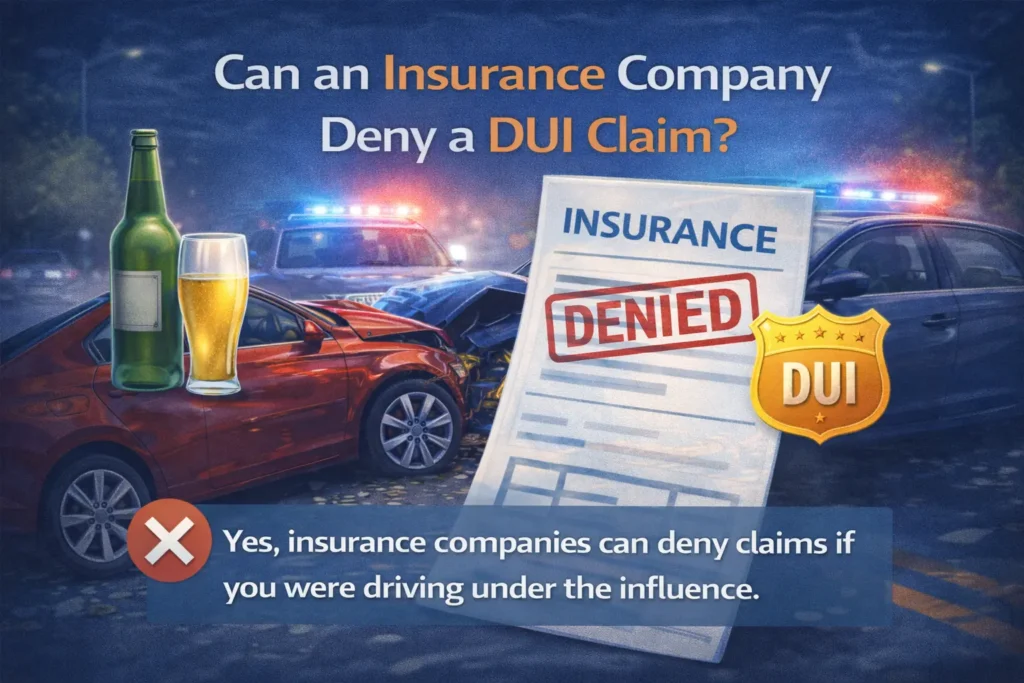
While it is rare for an insurer to deny a liability claim to a victim, they may deny certain benefits to the drunk driver. Common reasons for denial include:
- Intentional Acts: If the insurer can prove you intentionally crashed the car (rather than it being an accident caused by impairment), they can deny all coverage.
- Criminal Act Exclusion: As mentioned, if the policy excludes coverage for damages occurring during a criminal act, the insurer may deny first-party claims for the driver’s vehicle or medical needs.
- Excluded Drivers: If the person driving the car was specifically excluded from the policy, the insurance company is often not liable for any damages, even if the driver was sober—and certainly if they were drunk.
Punitive Damages and Insurance
In many US states, victims of drunk driving accidents can sue for punitive damages. Unlike compensatory damages (which pay for medical bills and lost wages), punitive damages are intended to punish the wrongdoer for “willful and wanton” conduct.
Most insurance policies do not cover punitive damages. This means if a jury awards a victim $100,000 in medical costs and $200,000 in punitive damages, the insurance company will likely pay the $100,000, but the drunk driver will be personally responsible for the $200,000.
The Financial Reality: SR-22 and High-Risk Insurance
If you are convicted of a DUI, you will likely be labeled a “high-risk driver.” This leads to several expensive consequences.
What is an SR-22?
An SR-22 is not insurance; it is a “Certificate of Financial Responsibility” filed by your insurance company with your state’s DMV. It proves that you are carrying the required amount of insurance. Many insurers refuse to file SR-22s and will drop your coverage, forcing you to find a specialized high-risk provider.
Premium Increases
On average, a DUI conviction in the US can increase your car insurance premiums by 70% to 100% or more. In some states, like California or North Carolina, the increase can be even more dramatic. You can expect to pay these higher rates for three to ten years, depending on your state’s “look-back” period.
Impact on Future Insurability
A DUI on your record makes you a liability in the eyes of standard carriers like State Farm, GEICO, or Progressive. While some may continue to cover you at a higher rate, others will issue a “non-renewal” notice. If you are dropped, you may have to turn to the “assigned risk” pool in your state, which is the most expensive type of insurance available.
Steps to Take After a Drunk Driving Accident
If you are involved in a crash where alcohol is a factor, the following steps are crucial for the insurance process:
- Call 911 Immediately: A police report is the most important piece of evidence. The officer will likely conduct a breathalyzer or blood test, which creates a legal record of intoxication.
- Document the Scene: Take photos of the vehicles, the road conditions, and any empty containers in or around the other vehicle.
- Seek Medical Attention: Even if you feel fine, adrenaline can mask injuries. Documentation of medical care is vital for your insurance claim.
- Notify Your Insurer: You have a contractual obligation to report accidents. Be honest, but stick to the facts of the crash.
- Consult an Attorney: DUI accidents involve complex legal intersections between criminal and civil law. A lawyer can help ensure you aren’t low-balled by the insurance company.
Frequently Asked Questions (FAQ)
1. Does car insurance pay for the victim’s medical bills if the driver was drunk?
Yes. In the US, the at-fault driver’s liability insurance is responsible for paying the victim’s medical bills and property damage, up to the policy’s limits.
2. Can I be sued personally if my insurance isn’t enough?
Yes. If the damages exceed your policy limits (for example, you have $25,000 in coverage but cause $100,000 in medical bills), the victim can sue you personally for the remaining $75,000.
3. Will my insurance pay for my car if I totaled it while drunk?
If you have Collision coverage, your insurer will typically pay for your car, unless your policy has a specific “criminal act” exclusion. Your liability insurance will not cover your own car.
4. How long does a DUI affect my insurance rates?
In most states, a DUI affects your insurance rates for 3 to 5 years. However, states like California have a 10-year look-back period where the DUI remains on your record for insurance and legal purposes.
5. What happens if an uninsured drunk driver hits me?
If you have “Uninsured Motorist” (UM) coverage on your own policy, your insurance company will step in and pay for your damages as if they were the other driver’s insurance.
6. Can my insurance company cancel my policy immediately after a DUI?
Most states have laws regarding when an insurer can cancel a policy mid-term. Generally, they can cancel your policy if your driver’s license is suspended or if you misrepresented yourself on your application. Otherwise, they will likely wait until the end of your term and then “non-renew” your policy.
7. Does insurance cover a “drunk” passenger?
If a passenger was drunk but the driver was sober, the accident is handled like any other standard claim. The intoxication of a passenger generally does not impact the insurance coverage unless they interfered with the operation of the vehicle.
The Bottom Line
While car insurance generally covers the damages resulting from a drunk driving accident to protect the public, the personal and financial toll on the driver is immense. From sky-high premiums and SR-22 requirements to the risk of being dropped by your carrier, the “protection” offered by insurance is minimal compared to the long-term consequences of a DUI. For victims, the path to compensation is usually clear, but it often requires navigating complex policy limits and potential legal battles for punitive damages.
Disclaimer: The information provided in this article is for educational and informational purposes only and does not constitute legal or financial advice. Laws regarding car insurance and DUI vary significantly by state and are subject to change. If you have been involved in a drunk driving accident, you should consult with a licensed attorney or insurance professional in your jurisdiction to discuss the specific details of your case.