Introduction
Hosting on Airbnb can turn your spare room or second home into extra income. But once you welcome paying guests, your insurance needs change. Many new hosts don’t realize that a standard homeowners insurance policy may not fully cover short-term rentals. That gap can lead to serious financial risk if there’s damage or an accident.
Airbnb home insurance coverage helps protect you when your property is used for short stays. This article explains what it is, how it works, what it may cover, and where you might still need extra protection. The goal is to help you host with more confidence and fewer surprises.
Table of Contents
Table of Contents
What is Airbnb home insurance coverage?
Airbnb home insurance coverage refers to insurance protection for homes or rooms rented to guests through short-term rental platforms like Airbnb.
When you host guests, your home is partly being used like a small business. Because of this, personal homeowners insurance may not provide full coverage during a guest’s stay.
Airbnb-related coverage may include:
- Protection for damage caused by guests
- Liability coverage if a guest is injured
- Coverage for certain accidents during a stay
This coverage can come from two main sources: your own insurance policy and protections offered through the hosting platform.
Do you know What Is burst pipe Insurence cliam tips
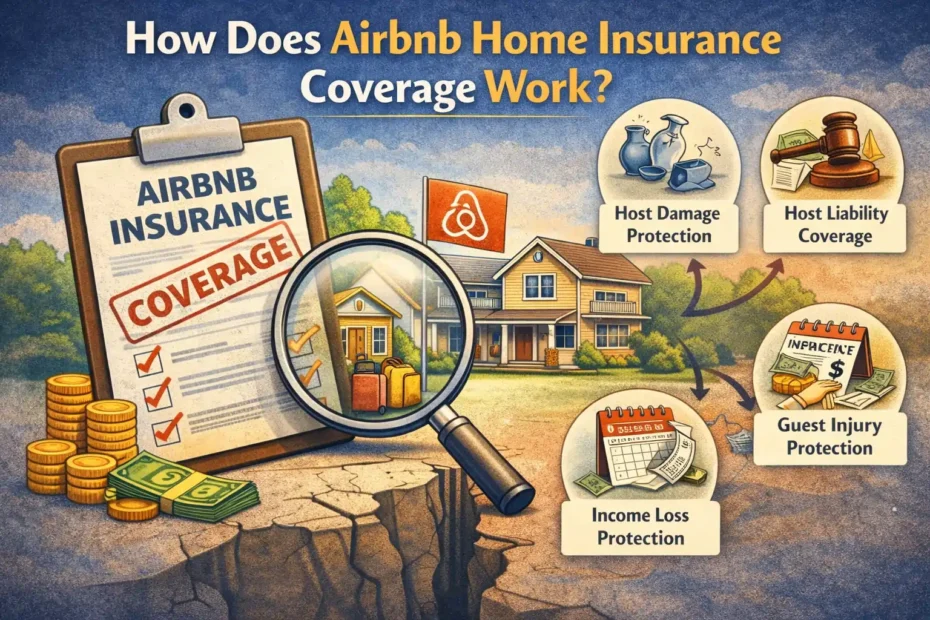
How does Airbnb home insurance coverage work?
Airbnb home insurance coverage works in layers.
First, you need to understand your homeowners insurance policy. Many standard policies limit or exclude coverage when a home is rented out regularly. Some insurers allow short-term rentals if you add an endorsement or switch to a special policy.
Next, Airbnb offers built-in protections for hosts. These programs may help with:
- Guest-caused property damage
- Liability claims if someone is hurt during a stay
However, these protections are not the same as a full insurance policy. They often have limits and conditions.
Here’s how it usually works step by step:
- You list your home or room on Airbnb
- A guest books and stays at your property
- An incident happens, such as damage or an injury
- You report the issue through Airbnb and your insurer
- Coverage may come from Airbnb’s host protections, your own policy, or both, depending on the situation
Having the right personal insurance in place helps fill gaps that platform protections may not cover.Also do you know what is avarage price of home insuence?
Real-life example
Imagine you rent out your basement apartment on Airbnb.
During a guest’s stay, a kitchen fire starts when they leave the stove on. The fire damages cabinets, walls, and part of the ceiling. The total repair cost is $18,000.
At the same time, the guest trips while leaving the property and breaks their wrist. They claim the steps were poorly lit and ask you to cover $12,000 in medical costs.
In this case:
- Property damage coverage may help pay for repairs
- Liability coverage may help with the guest’s injury claim
If you only had a standard homeowners policy that excludes short-term rentals, you might have to pay much of this yourself. With proper Airbnb home insurance coverage, more of these costs may be covered.
What is mean by ho-3 policy in home insurence?
Why is Airbnb home insurance coverage important?
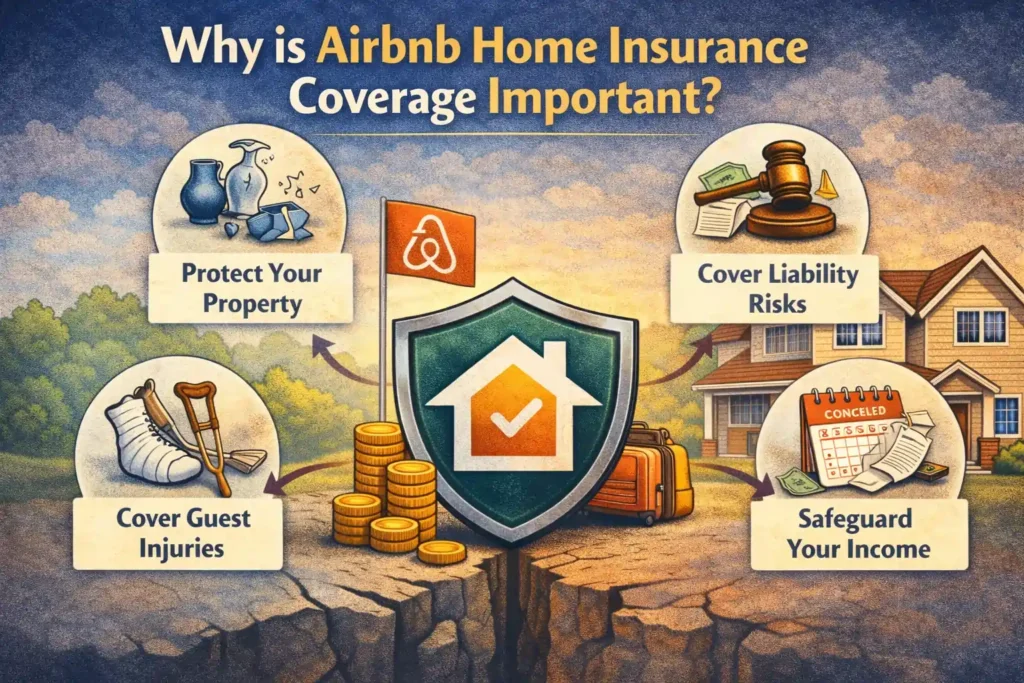
Airbnb hosting adds new risks to your property. You may have guests you don’t know using your home, appliances, and outdoor spaces.
Airbnb home insurance coverage is important because it can help:
- Pay for repairs if guests damage your home
- Protect you financially if a guest is injured
- Cover legal costs linked to liability claims
- Reduce stress during unexpected incidents
Without the right coverage, a single accident could lead to thousands of dollars in out-of-pocket expenses. Insurance provides a financial safety net while you earn income from hosting.
Do you know what is AOB mean in home insurence?
Pros and cons of Airbnb home insurance coverage
Pros
- Helps protect against guest-caused damage
- Provides liability coverage for injuries
- Supports safer and more confident hosting
- May cover losses not included in standard homeowners insurance
Cons
- May cost more than standard home insurance
- Coverage limits and exclusions can apply
- Claims processes may take time
- Not all types of damage or business activities are covered
Common mistakes people make
- Assuming homeowners insurance fully covers Airbnb rentals
Many policies exclude business or rental use without special approval. - Relying only on Airbnb’s built-in protection
Platform protections may not replace full insurance and can have limits. - Not telling the insurance company about hosting
Failing to inform your insurer can lead to denied claims. - Skipping liability coverage
Guest injuries can be costly, and liability protection is essential. - Not checking local rules
Some areas have laws that affect short-term rentals and insurance needs.
Do you know Common Home Insurance Mistakes?
The Insurance Gap Every Airbnb Host Faces
When you decide to list your property on Airbnb, you cross an important line in the eyes of insurance companies. Your home transforms from a private residence into something that resembles a small business. This distinction matters because standard homeowners insurance policies are written with the assumption that only you and your family live in the home, not a steady stream of paying guests.
Understanding this gap is the first step toward protecting yourself financially. The welcome mat you roll out for guests also rolls in new risks that require a different approach to insurance.
Understanding the Two Layers of Airbnb Protection
Airbnb hosts have access to protection from two distinct sources. Knowing how these layers work together helps you identify where coverage exists and where gaps remain.
Layer One: Your Personal Homeowners Insurance
Your standard homeowners insurance policy was designed for owner-occupied residences. When you live in the home full time, the insurer calculates risk based on normal daily life. Adding short-term rentals changes that risk profile significantly.
What Standard Policies Typically Exclude
Most standard homeowners policies contain language excluding or limiting coverage for business pursuits on the property. Short-term rentals often fall under this exclusion. If your policy excludes business activities and you host without telling your insurer, a guest-caused claim could be denied entirely.
The Importance of Disclosure
Telling your insurance company about your hosting activity is not optional. Insurers can cancel policies or deny claims if they discover unreported rental activity. Some insurers welcome short-term rentals and offer endorsements specifically for this purpose. Others may require switching to a different policy type. Either way, disclosure protects your ability to collect when something goes wrong.
Layer Two: Airbnb’s Host Protection Programs
Airbnb provides two main protection programs for hosts. Understanding their limits is just as important as understanding their benefits.
AirCover for Hosts
Airbnb’s current protection package includes several components:
| Protection Component | What It Covers | Key Limitations |
|---|---|---|
| Host Damage Protection | Guest-caused damage to your home or belongings | Up to $3 million, excludes cash, certain collectibles, and wear and tear |
| Host Liability Insurance | Bodily injury or property damage claims from guests | Up to $1 million, secondary to your primary insurance |
| Experience Liability | Claims from guests during booked experiences | Up to $1 million, specific to Airbnb Experiences |
| Damage Protection for Vehicles and Watercraft | Limited coverage for guest damage | Low limits, many exclusions apply |
Important Caveats About Airbnb’s Protection
Airbnb’s protections come with conditions that every host should understand:
- Deductibles Apply: Just like standard insurance, you may pay a deductible before coverage kicks in.
- Exclusions Exist: Intentional damage, normal wear and tear, and certain high-value items may not be covered.
- Cooperation Required: You must follow Airbnb’s reporting and documentation requirements exactly.
- Secondary Coverage: In many cases, Airbnb’s liability protection pays only after your personal insurance is exhausted, which means claims still go through your policy.
Policy Options for Airbnb Hosts
Depending on your hosting frequency and the type of property you rent, several insurance options exist. Each serves a different hosting style.
Homeowners Insurance With Short-Term Rental Endorsement
Some insurance companies offer endorsements that attach to your existing homeowners policy specifically permitting short-term rentals. This approach works well for hosts who:
- Rent their primary residence occasionally
- Live in the home while hosting
- Host only a few weeks per year
The endorsement typically adds coverage for guest-related risks while keeping your base policy intact. Premium increases vary but often fall between 15 and 30 percent above standard rates.
Dwelling Fire or Landlord Policies
For hosts who rent entire homes that they do not live in, a dwelling fire policy or landlord policy may be appropriate. These policies are designed for non-owner-occupied properties and include:
- Property damage coverage for the structure
- Liability protection for tenant injuries
- Loss of rental income coverage if the home becomes unrentable after a covered loss
These policies typically cost more than standard homeowners insurance but provide more appropriate coverage for investment properties used for short-term rentals.
Specialized Short-Term Rental Insurance
A growing number of insurers now offer policies specifically designed for short-term rental hosts. These policies combine elements of homeowners and commercial insurance to address the unique risks of home-sharing. Benefits often include:
- Coverage for guest-caused damage
- Liability protection for guest injuries
- Coverage for theft by guests
- Business personal property coverage for items you provide guests
These specialized policies provide the most comprehensive protection but also come with higher premiums. For frequent hosts or those renting multiple properties, the additional cost often justifies the peace of mind.
Comparison Table: Insurance Options for Airbnb Hosts
| Policy Type | Best For | Typical Cost | Key Features |
|---|---|---|---|
| Standard Homeowners + Endorsement | Occasional hosts, owner-occupied | Moderate increase | Adds guest coverage to existing policy |
| Landlord/Dwelling Fire | Non-owner-occupied entire homes | Higher than standard | Designed for rental properties |
| Specialized Short-Term Rental | Frequent hosts, multiple properties | Highest | Comprehensive guest and business coverage |
| Airbnb AirCover Only | Minimal risk, very occasional hosting | Included with platform | Limited coverage, many exclusions |
Real Claims Scenarios and How Coverage Responds
Understanding how different coverage types respond to actual events helps clarify why layered protection matters.
Scenario One: Guest Causes Kitchen Fire
A guest accidentally starts a fire while cooking, causing $25,000 in damage to cabinets, appliances, and walls.
With Standard Homeowners Only: Claim likely denied due to business use exclusion. Host pays $25,000 out of pocket.
With Standard Homeowners Plus Endorsement: Endorsement covers guest-caused damage. Host pays deductible, insurer covers remaining repair costs.
With Airbnb AirCover Only: Host reports through Airbnb platform. Protection may respond up to $3 million, but host must follow strict reporting requirements. If claim exceeds limits or falls under exclusion, host pays remaining balance.
With Specialized Short-Term Rental Policy: Policy designed for this exact scenario responds. Host pays deductible, coverage applies to all covered damage.
Scenario Two: Guest Injured on Property
A guest trips on uneven sidewalk steps and breaks their wrist, seeking $15,000 in medical costs and alleging negligence.
With Standard Homeowners Only: Liability coverage may apply if policy does not exclude rentals, but many policies exclude business-related liability. Claim could be denied.
With Standard Homeowners Plus Endorsement: Endorsement typically includes liability protection for guest injuries within coverage limits.
With Airbnb AirCover Only: Host liability insurance component may respond up to $1 million, but coverage is secondary. Guest may need to pursue claim through host’s primary insurance first.
With Specialized Short-Term Rental Policy: Built-in liability coverage for guest injuries responds directly, often with legal defense coverage included.
Additional Risks Hosts Often Overlook
Beyond property damage and guest injuries, several other exposures deserve attention.
Theft by Guests
While most guests are honest, theft does occur. Standard homeowners policies cover theft, but exclusions for rental activity may apply. Airbnb’s protection includes some theft coverage, but limits and documentation requirements apply. Taking inventory of valuable items and securing irreplaceable possessions before hosting reduces risk.
Damage to Guests’ Belongings
If a guest’s luggage, electronics, or personal items are damaged during their stay, who pays? Your insurance typically does not cover guest property. Guests should have their own renters or travel insurance for their belongings. Clarifying this expectation before check-in prevents misunderstandings.
Loss of Rental Income
If a covered event like a fire makes your property unrentable for months, you lose hosting income during repairs. Some landlord and specialized short-term rental policies include loss of income coverage that reimburses you for lost rental revenue during the restoration period. This coverage helps maintain cash flow when your property is unusable.
Liability for Common Areas
If you host in a multi-unit building like a condo or apartment, your guests using common areas like hallways, pools, or gyms creates liability exposure for you and potentially your neighbors. Condo associations and HOAs may have rules about short-term rentals, and violating them could lead to fines or legal action. Review your governing documents and discuss insurance implications with your association.
5 Steps to Properly Insure Your Airbnb Rental
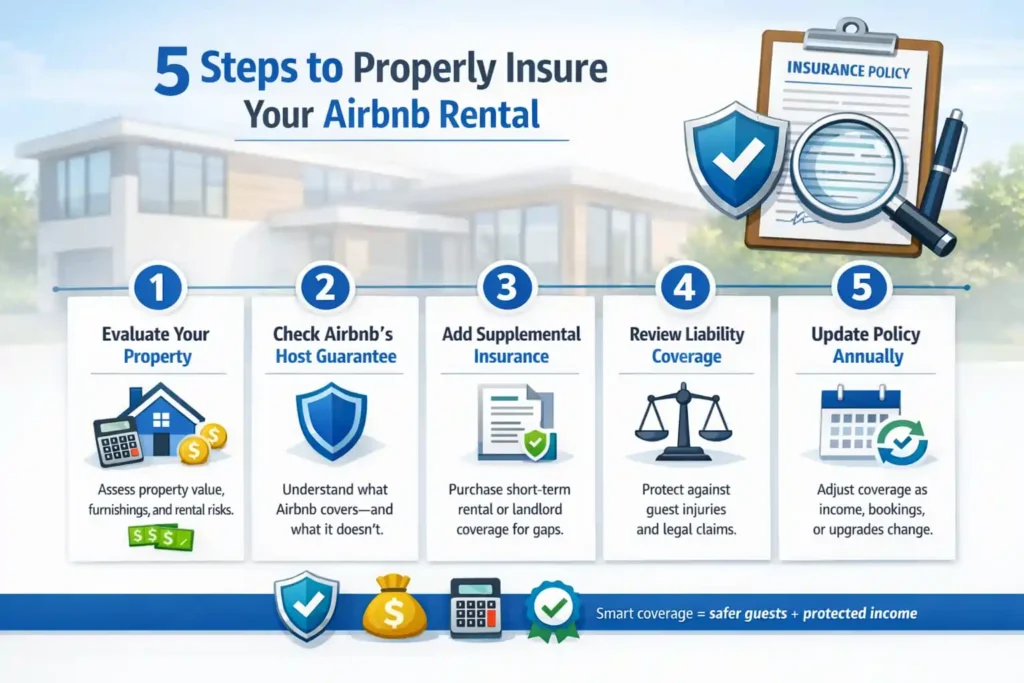
Taking a systematic approach to insurance ensures you don’t miss critical coverage.
Step One: Review Your Current Policy
Read your homeowners insurance declarations page and policy language. Look for exclusions related to business pursuits, rental activities, or boarding of tenants. If language is unclear, call your agent and ask specifically whether short-term rentals are covered.
Step Two: Contact Your Insurer Before Hosting
Have a direct conversation with your insurance company about your plans. Ask what options they offer for short-term rental hosts. Get premium quotes for endorsements or alternative policies. Document the conversation and any approvals you receive.
Step Three: Understand Airbnb’s Protection Details
Read Airbnb’s AirCover terms carefully. Note coverage limits, exclusions, deductibles, and reporting requirements. Bookmark the claims reporting process so you can find it quickly if needed.
Step Four: Compare Specialized Policies
If you plan to host frequently, get quotes from insurers specializing in short-term rental coverage. Compare costs, coverage limits, and exclusions against your current policy plus endorsement options.
Step Five: Document Everything
Maintain detailed records of your property’s condition, including photos and videos before each guest arrives. Save receipts for furnishings and appliances. Document any guest-caused damage immediately with photos and written descriptions. Good documentation strengthens any claim you file.
Step Six: Review Coverage Annually
As your hosting activity changes, your insurance needs change too. Review your coverage annually and after significant events like purchasing new furnishings, expanding to additional properties, or changing your hosting frequency.
The Cost of Being Wrong
Skipping proper insurance for your Airbnb rental creates exposure to financial losses that can wipe out years of hosting income. A single serious incident can cost:
- $50,000 or more for structural fire damage
- $30,000 for water damage from an overflowing tub
- $100,000 or more for a liability claim with legal defense costs
- Full replacement cost for stolen furnishings and personal property
Compare these potential losses to the annual cost of proper insurance, which for most hosts ranges from a few hundred to a few thousand dollars depending on coverage type and property value. The math strongly favors being properly insured.
Final Thoughts on Airbnb Home Insurance
The sharing economy created new opportunities for homeowners to earn income from their properties, but it also created new insurance challenges. Standard policies written for private residences simply weren’t designed for the realities of short-term rentals.
Successful hosts recognize that insurance is not an area to cut corners. They disclose their activities to insurers, understand the limits of platform protections, and purchase appropriate coverage for their specific hosting situation. This approach allows them to focus on creating positive guest experiences rather than worrying about financial disaster.
Whether you host a single room occasionally or manage multiple properties full time, taking the time to get your insurance right protects the income you work hard to earn and the home you’ve invested in building.
Frequently asked questions (FAQs)
Does standard homeowners insurance cover Airbnb rentals?
Often not fully. Many policies require an endorsement or separate coverage for short-term rentals.
Does Airbnb provide insurance for hosts?
Airbnb offers certain host protections, but these may have limits and are not the same as a personal insurance policy.
Do I need business insurance to host on Airbnb?
In some cases, you may need a policy designed for short-term rentals or home-sharing.
What happens if a guest gets hurt in my home?
Liability coverage from your policy or platform protection may help, depending on the situation and coverage details.
Conclusion
Airbnb hosting can be rewarding, but it also changes your risk. Airbnb home insurance coverage helps protect your property, income, and savings when guests stay in your home.
Before hosting, review your current policy, talk to your insurer, and understand what platform protections do and do not cover. With the right coverage in place, you can focus more on being a great host and less on worrying about what might go wrong.