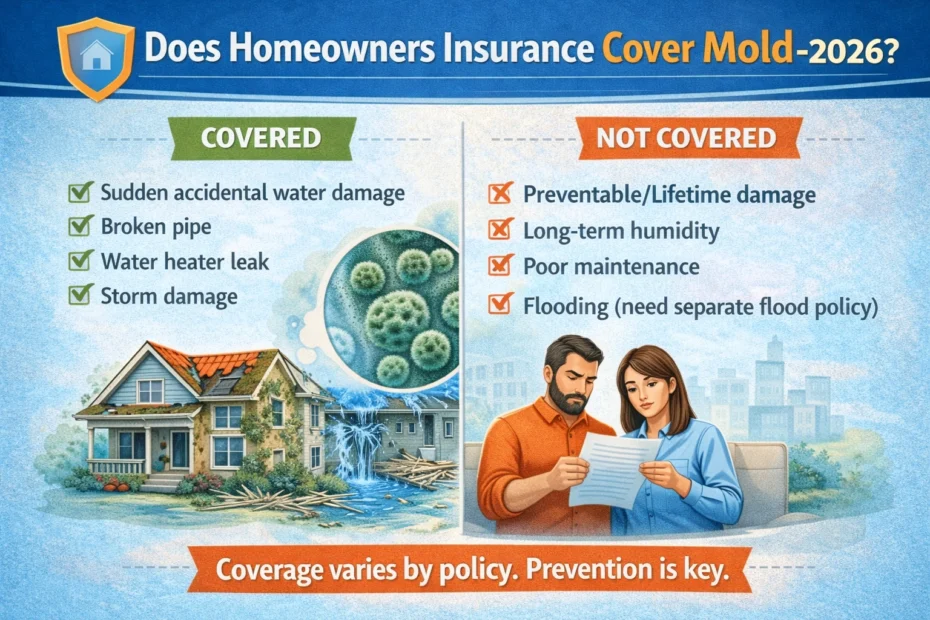
Mold is one of the most common and misunderstood problems homeowners face. It can appear quietly behind walls, under floors, or in damp basements, and by the time it is discovered, the damage can already be extensive. Because mold remediation can be expensive, many homeowners immediately ask an important question: does homeowners insurance cover mold?
The short answer is: sometimes. Homeowners insurance may cover mold damage in specific situations, but it is not guaranteed. Coverage depends on what caused the mold, how quickly the problem was addressed, and the terms of your individual policy. Understanding how mold coverage works can help you avoid costly surprises and make smarter decisions when protecting your home.
Understanding Mold and Why It Matters
Table of Contents
Table of Contents
Mold is a type of fungus that thrives in moist environments. It spreads through microscopic spores that float through the air and settle on damp surfaces. Common areas for mold growth include bathrooms, kitchens, basements, crawl spaces, and anywhere water damage has occurred.
Beyond property damage, mold can also affect indoor air quality and cause health issues for some individuals, especially those with allergies or respiratory conditions. Because mold is often associated with moisture problems, insurance companies usually view it as a preventable issue rather than an unavoidable accident.
Why Mold Is Dangerous
Mold can cause:
- Structural damage to wood and drywall
- Stains and odor problems
- Reduced indoor air quality
- Health issues (especially for people with allergies, asthma, or weakened immune systems)
Because mold is usually linked to moisture problems, insurance companies often view it as preventable — and that’s where coverage becomes complicated.
When Homeowners Insurance May Cover Mold
Homeowners insurance may cover mold only when it is caused by a sudden and accidental event that is already covered under your policy. For example, mold that develops due to a burst pipe, an unexpected appliance leak, or water damage from extinguishing a fire may qualify for coverage.
In these cases, the insurance company may help pay for mold remediation and repairs. However, coverage is often limited, and many policies place a cap on how much they will pay for mold-related damage.
Why Mold Is a Big Concern for Insurance Companies
In the early 2000s, mold lawsuits increased dramatically. Some claims reached hundreds of thousands of dollars. As a result:
- Insurance companies tightened mold coverage
- Many policies added exclusions
- Mold coverage limits were introduced
- Optional mold endorsements became common
Today, mold is typically covered only under specific circumstances.
When Homeowners Insurance Covers Mold
Homeowners insurance may cover mold if it results from a sudden and accidental event that is already covered by your policy.
Here are common examples:
1. Burst Pipes
If a pipe suddenly bursts and water damages your walls, and mold develops as a result, it may be covered.
Key factor:
The pipe break must be sudden — not due to long-term neglect.
2. Accidental Appliance Leaks
If your washing machine hose suddenly fails and floods part of your home, mold that develops from that incident may be covered.
3. Water Used to Extinguish a Fire
If firefighters use water to put out a fire and moisture leads to mold growth, your policy may help pay for mold removal.
4. Storm Damage
If a storm damages your roof and rainwater enters your home, mold may be covered — provided you repair the roof quickly.
Important Rule
Insurance usually covers mold only if the original water damage was covered.
If the source of moisture isn’t covered, mold likely won’t be covered either
When Mold Is Not Covered
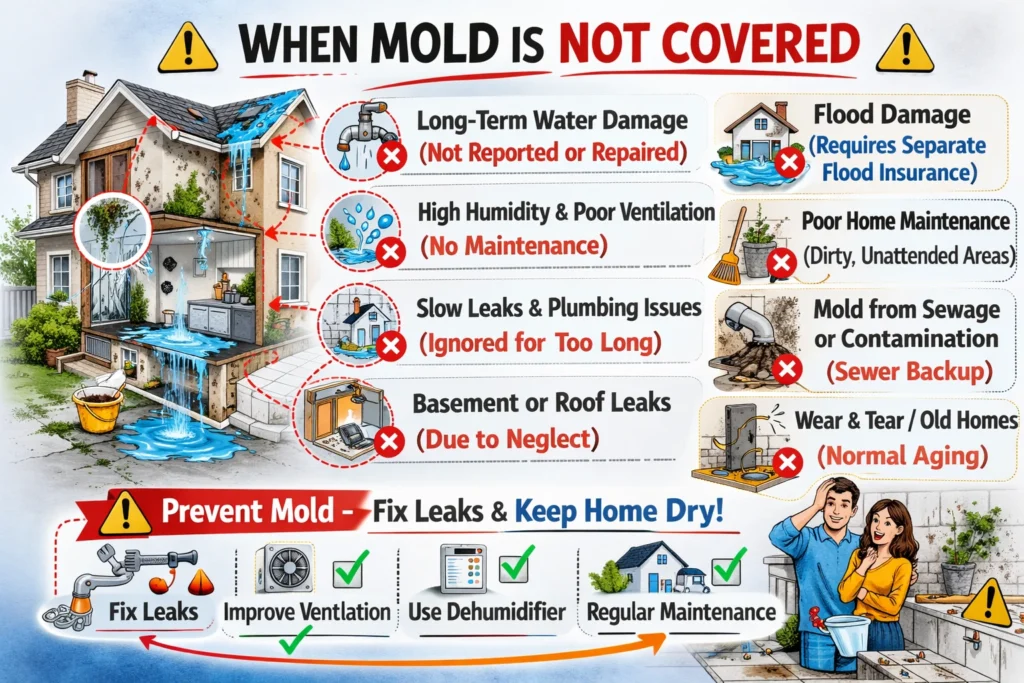
In most situations, homeowners insurance does not cover mold caused by neglect or long-term maintenance issues. Mold that develops due to ongoing leaks, high humidity, poor ventilation, or failure to address water damage is usually excluded.
Additionally, mold caused by flooding is not covered by standard homeowners insurance. Flood-related mold damage typically requires a separate flood insurance policy.
Understanding Mold Coverage Limits
Even when mold is covered, insurers often set strict limits. Some policies offer optional mold coverage endorsements for additional protection. Reviewing your policy or speaking with your insurer can help you understand your coverage and avoid surprises.
How to Reduce Mold Claim Problems

To protect your home and your insurance claim, act quickly after water damage. Repair leaks immediately, dry affected areas thoroughly, and keep records of all repairs. Preventive maintenance plays a key role in avoiding mold issues.
How Insurance Companies Evaluate Mold Claims
When you file a mold claim, the insurance company will investigate:
- The source of moisture
- How long the problem existed
- Whether proper maintenance was performed
- How quickly the homeowner responded
Documentation plays a critical role. Photos, repair records, and professional assessments can significantly improve your chances of approval.
What to Do If You Discover Mold
If you find mold in your home:
- Identify and stop the source of moisture
- Document the damage with photos
- Contact your insurance company
- Avoid disturbing large mold areas yourself
- Consider professional remediation
Taking these steps early can help limit damage and support a valid insurance claim.
Does Homeowners Insurance Cover Black Mold?
Many people worry specifically about black mold.
“Black mold” usually refers to a species called Stachybotrys chartarum. However:
Insurance companies do not base coverage on the type of mold.
They base it on:
- The cause of the mold
- Whether it was sudden and accidental
- Whether proper maintenance was performed
So the answer is:
Black mold is covered only if the cause is covered
What Is a Mold Endorsement?
A mold endorsement (also called a rider) is optional coverage you can add to your homeowners policy.
Benefits:
- Higher mold limits
- Broader coverage
- Better protection for water-related events
If you live in:
- A humid climate
- An older home
- A home with previous water damage
This extra coverage may be worth considering.
How Insurance Companies Evaluate Mold Claims
If you file a mold claim, your insurer will investigate carefully.
They typically look at:
1. Source of Moisture
Was it sudden or long-term?
2. Timeline
How long did the water sit before you addressed it?
3. Maintenance Records
Did you repair known issues quickly?
4. Documentation
Do you have:
- Photos?
- Receipts?
- Professional inspection reports?
The more documentation you provide, the stronger your claim.
What to Do If You Discover Mold
If you find mold in your home:
Step 1: Identify and Stop the Moisture Source
Fix leaks immediately.
Step 2: Document Everything
Take photos and videos before cleaning.
Step 3: Contact Your Insurance Company
Report the issue promptly.
Step 4: Avoid Disturbing Large Areas
Disturbing mold can release spores.
Step 5: Hire a Professional
Certified mold remediation specialists can:
- Assess damage
- Contain contamination
- Safely remove affected materials
Professional documentation can help support your claim.
How Much Does Mold Remediation Cost?
Costs depend on severity:
Small area (under 10 square feet):
$500 – $1,500
Medium contamination:
$2,000 – $6,000
Severe structural damage:
$10,000 – $30,000+
If HVAC systems are contaminated, costs increase significantly.
Does Homeowners Insurance Cover Mold Testing?
Testing is sometimes covered if:
- The underlying water damage is covered
- The testing is required to evaluate the claim
But it depends on your policy.
Will Filing a Mold Claim Raise My Premium?
Possibly.
Insurance companies may:
- Increase your premium
- Add restrictions
- Non-renew your policy (in severe cases)
Always compare the cost of remediation to your deductible before filing.
How to Prevent Mold and Protect Your Insurance Claim
Prevention is key.
1. Fix Leaks Immediately
Even small drips can cause mold.
2. Maintain Gutters and Roof
Water intrusion often begins at the roof.
3. Control Indoor Humidity
Keep humidity below 50%.
4. Use Bathroom and Kitchen Exhaust Fans
5. Dry Water Damage Within 24–48 Hours
Insurance companies expect homeowners to act quickly.
Frequently Asked Questions
Is mold removal covered by homeowners insurance?
Mold removal may be covered if the mold resulted from a covered, sudden event.
Does homeowners insurance cover black mold?
Insurance coverage depends on the cause of the mold, not the type.
Can I buy additional mold coverage?
Some insurers offer optional mold endorsements with higher coverage limits.
Is mold from roof leaks covered?
Sudden roof damage may be covered, but long-term roof leaks usually are not.