Introduction
Buying a car with a rebuilt title can feel like finding a hidden treasure. You get a modern, reliable-looking vehicle for a fraction of the price of a “clean” title car. However, many drivers are surprised when they call their insurance agent and realize the “deal” comes with a few strings attached.
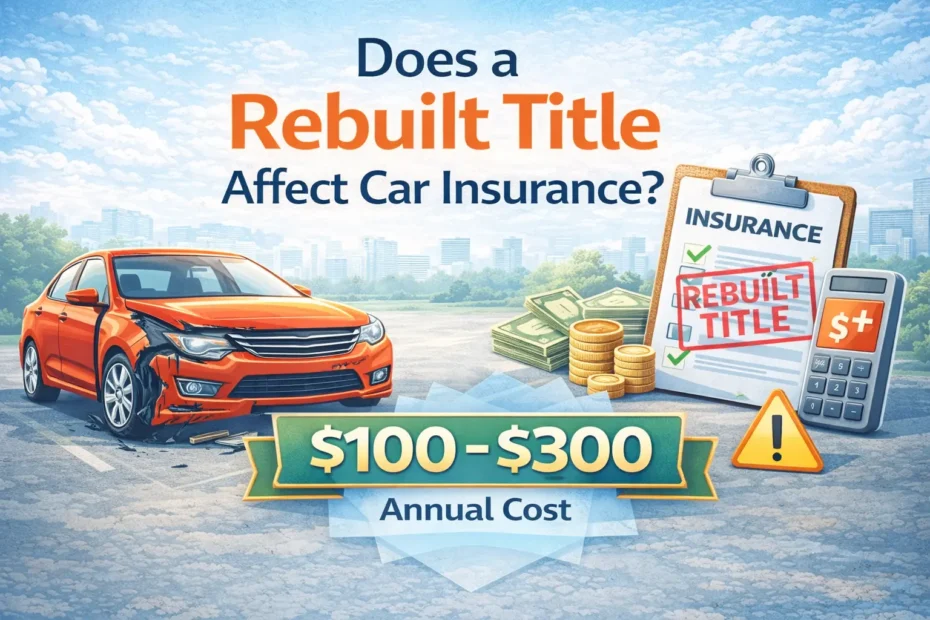
The short answer is yes—a rebuilt title significantly affects your car insurance. It impacts how much you pay, which companies will cover you, and what happens if you get into an accident. In this article, we will explain exactly why these titles change your insurance experience and how you can navigate the process without breaking the bank.
What is a Rebuilt Title?
Table of Contents
Table of Contents
To understand a rebuilt title, we first have to talk about its cousin: the salvage title. When a car is in a major accident, flood, or fire, an insurance company might decide that the cost to fix it is more than the car is worth. At that point, the car is declared a “total loss” and given a salvage title.
A rebuilt title is what happens after that salvage car is professionally repaired. Before it can be driven on public roads again, it must pass a strict state safety inspection. Once it passes, the state issues a new title labeled “Rebuilt.”
Here is what a rebuilt title tells you about a car:
- The car was once declared a total loss (totaled).
- Someone invested time and money to fix it back to roadworthy standards.
- A state inspector has verified that the car is safe to drive.
- The car’s market value is permanently lower than a clean title car.
How Does a Rebuilt Title Affect Insurance?
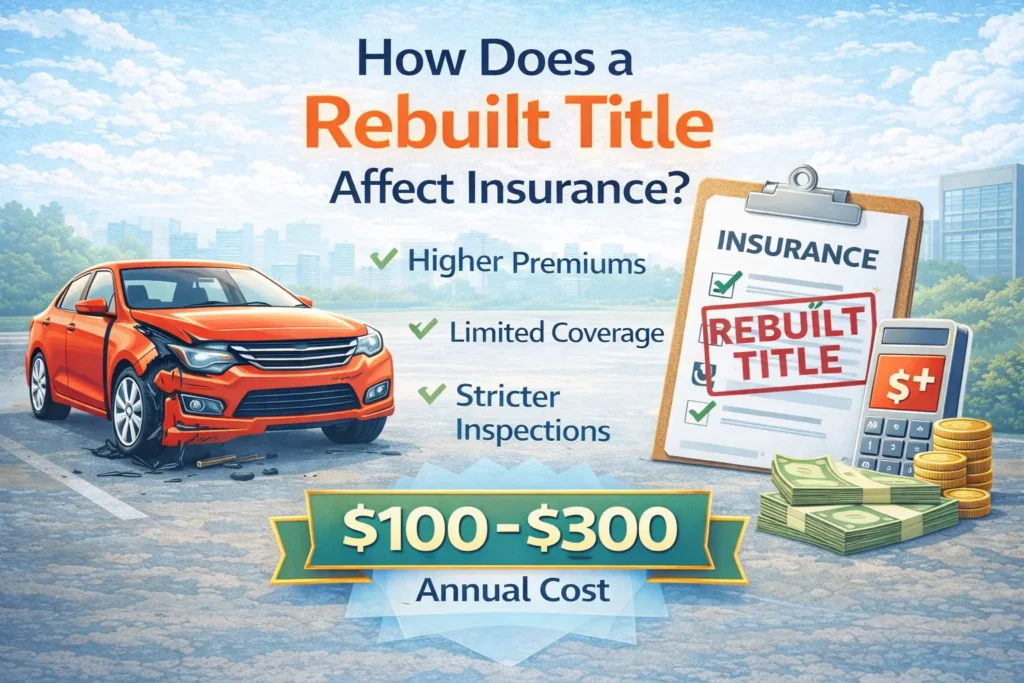
The relationship between a rebuilt title and insurance is all about risk. Even though the car passed a safety test, insurance companies worry about “hidden” problems that might pop up later, like electrical issues or a weakened frame.
Here is a step-by-step flow of how it works:
- The Risk Assessment: When you apply for a policy, the insurer sees the “rebuilt” brand on your vehicle’s history. They view this as a higher risk for future mechanical failure or safety issues.
- The Premium Hike: Because of this risk, most companies will charge a higher monthly premium. In 2026, you can expect to pay about 20% to 50% more than you would for a clean title car.
- The Coverage Limit: Many big-name insurers will only offer “Liability Only” coverage. This means they will pay for the other person’s car if you cause an accident, but they won’t pay to fix your car.
- The Value Calculation: If you do find a company that offers full coverage (Comprehensive and Collision), they will value your car at a much lower price. If the car is totaled again, your payout will be much smaller.
Real-Life Example
Let’s look at a realistic situation involving two identical 2022 Honda Civics.
- Car A has a clean title and is worth $20,000.
- Car B has a rebuilt title (it was fixed after a flood) and is sold for $12,000.
You buy Car B to save $8,000. When you call for insurance, you find out the clean title car would cost $150 a month to insure. However, for your rebuilt car, the company quotes you $210 a month.
Two years later, you are in a minor fender bender. Even though the repair costs are the same for both cars, the insurance company decides to “total” your rebuilt car because its market value is so low. While the owner of Car A gets a check for $18,000, you only receive $10,000 because of the rebuilt status. In the long run, the insurance costs and lower payout might eat up a big chunk of your initial $8,000 savings.
Do You Know What is How to Sell Car Insurance
Why is a Rebuilt Title Important?
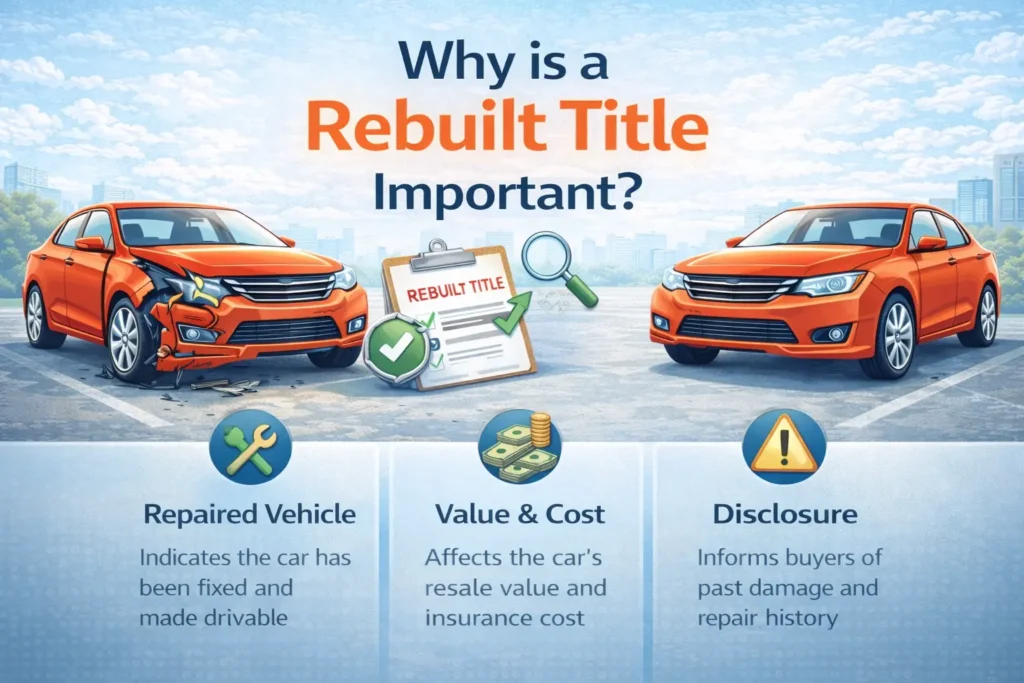
Understanding how a rebuilt title affects insurance is important because it changes the “True Cost” of owning the car. Most people focus only on the low price tag at the dealership. However, if you don’t account for the higher insurance premiums, you might end up spending more over three or four years than if you had just bought a clean title car.
It is also important for your safety. Insurance companies are strict because they want to ensure the car won’t fail while you are driving at highway speeds. By understanding their rules, you can make a smarter decision about whether a specific rebuilt car is a safe and affordable investment for your family.
Pros and Cons of a Rebuilt Title
Before you sign the paperwork on a rebuilt vehicle, it helps to look at the balanced picture.
Pros:
- Lower Purchase Price: You can often buy a much newer or “fancier” car than you could otherwise afford.
- Roadworthiness: The car has been inspected by the state, so it is legally safe to drive.
- Perfect for Long-Term Use: If you plan to drive the car until it stops running, the low resale value doesn’t matter as much.
Cons:
- Higher Insurance Costs: You will almost certainly pay more for your monthly policy.
- Harder to Find Full Coverage: Many companies will refuse to offer collision or comprehensive insurance.
- Poor Resale Value: It is very difficult to sell a rebuilt car for a good price later on.
- Financing Struggles: Many banks and credit unions will not give you a loan for a rebuilt title car.
Common Mistakes People Make
Buying a rebuilt car can be a great move if you do it correctly, but avoid these common errors:
- Confusing Rebuilt with Salvage: Never buy a car that still has a “Salvage” title unless you are a mechanic. You cannot legally drive or insure a salvage car until it is repaired and converted to a “Rebuilt” status.
- Not Checking with Insurance First: Always call your insurance agent with the Vehicle Identification Number (VIN) before you buy the car. Some companies will not insure certain brands of rebuilt cars at all.
- Forgetting to Ask for Photos: A helpful tip is to ask the seller for photos of the car before it was fixed. This helps you see if the damage was just cosmetic (like a dented door) or structural (like a crushed engine).
- Skipping a Mechanic’s Inspection: Even if the state passed the car, you should pay a private mechanic to look for hidden issues like bypassed airbags or poorly welded frames.
Frequently Asked Questions (FAQs)
Can I get full coverage on a rebuilt title car?
Yes, but it is much harder. Companies like State Farm and Progressive are known to offer it more often than others, but they may require a separate professional inspection and photos of the repairs first.
Why is my rebuilt title insurance so expensive?
Insurers worry that previous damage might lead to future problems. For example, if a car was once flooded, the wiring might corrode over time, causing a fire or an accident that the insurance company would have to pay for.
Does a rebuilt title ever go away?
No. Once a car has been branded with a rebuilt title, that brand stays with the vehicle’s permanent record forever. You cannot “clean” a title after it has been labeled rebuilt.
Will I get less money if my rebuilt car is totaled again?
Yes. Insurance payouts are based on the car’s market value. Since a rebuilt car is worth 20% to 40% less than a clean car, your “Total Loss” check will be significantly smaller.
Conclusion
A rebuilt title definitely affects your car insurance, usually by making it more expensive and harder to find. However, this doesn’t mean you should avoid these cars entirely. For a budget-conscious buyer who plans to keep a vehicle for a long time, the initial savings can outweigh the higher insurance costs.
The best advice is to do your homework before you pay. Get a quote from your insurance company first, have a trusted mechanic look at the repairs, and make sure you are comfortable with the fact that the car will be worth less when you try to sell it. If the math still looks good after those steps, a rebuilt title car could be a smart way to get on the road for less.