Introduction
Many car owners hear about GAP insurance when buying or financing a vehicle, but later they are unsure whether they actually have it. This confusion is common, especially if paperwork was signed quickly at a dealership. GAP insurance can make a big financial difference if your car is totaled or stolen, so knowing whether your policy includes it is important.
Understanding your coverage helps you avoid unexpected costs and gives peace of mind. In this article, you’ll learn what GAP insurance is, how to check if your car has it, how it works, and why it may matter for your financial protection.
What is how do I know if my car has gap insurance?
GAP insurance, short for Guaranteed Asset Protection, covers the difference between what your car is worth and what you still owe on a loan or lease if the vehicle is declared a total loss.
Cars lose value quickly, especially during the first few years. Sometimes, the remaining loan balance is higher than the car’s market value.
GAP insurance helps cover that “gap.”
It is commonly added when:
- Financing a new vehicle
- Leasing a car
- Making a small down payment
- Choosing a long loan term
You may purchase GAP coverage through a dealership, lender, or insurance company.
How does how do I know if my car has gap insurance work?
Table of Contents
Table of Contents
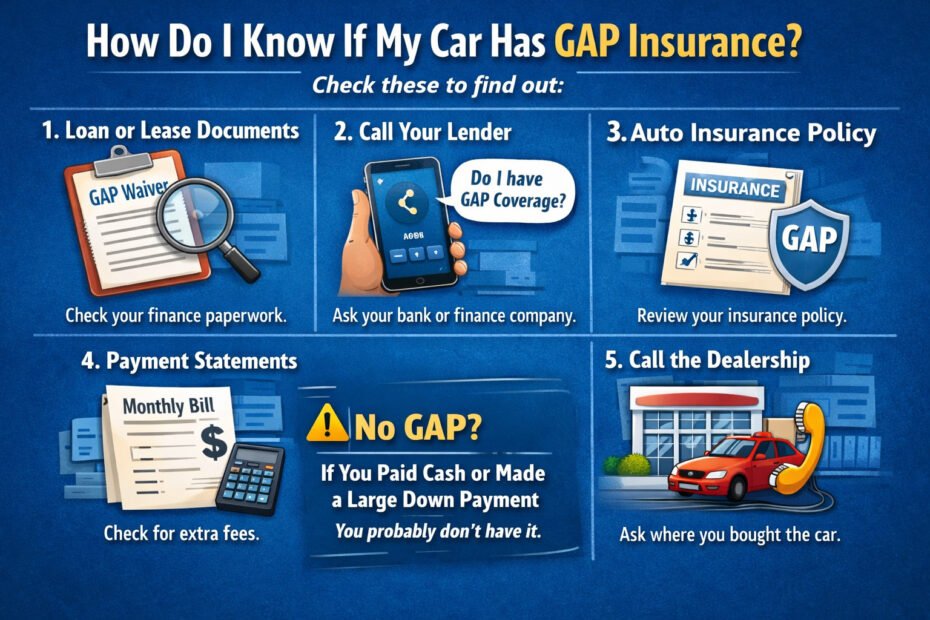
If you are unsure whether you have GAP insurance, follow these simple steps:
- Check your auto insurance policy
Look for terms like “GAP coverage” or “loan/lease payoff coverage.” - Review dealership paperwork
Financing contracts often list optional products added during purchase. - Contact your insurance provider
Ask directly if GAP coverage is active on your policy. - Call your lender or leasing company
Some lenders include GAP insurance automatically. - Check monthly payment details
If GAP insurance was financed, it may appear in your loan balance.
Taking a few minutes to review documents can quickly confirm your coverage.
Real-life example
Imagine Alex buys a new car for $30,000 with a small down payment. After one year, the car’s value drops to $23,000, but Alex still owes $27,000 on the loan.
Unfortunately, the car is totaled in an accident.
- Insurance company pays market value: $23,000
- Remaining loan balance: $27,000
- Difference owed: $4,000
Without GAP insurance, Alex must pay the $4,000 out of pocket. With GAP coverage, that remaining balance is typically covered, reducing financial stress.
Do you know what is How Do Car Insurance Companies Verify Address?
Why is how do I know if my car has gap insurance important?
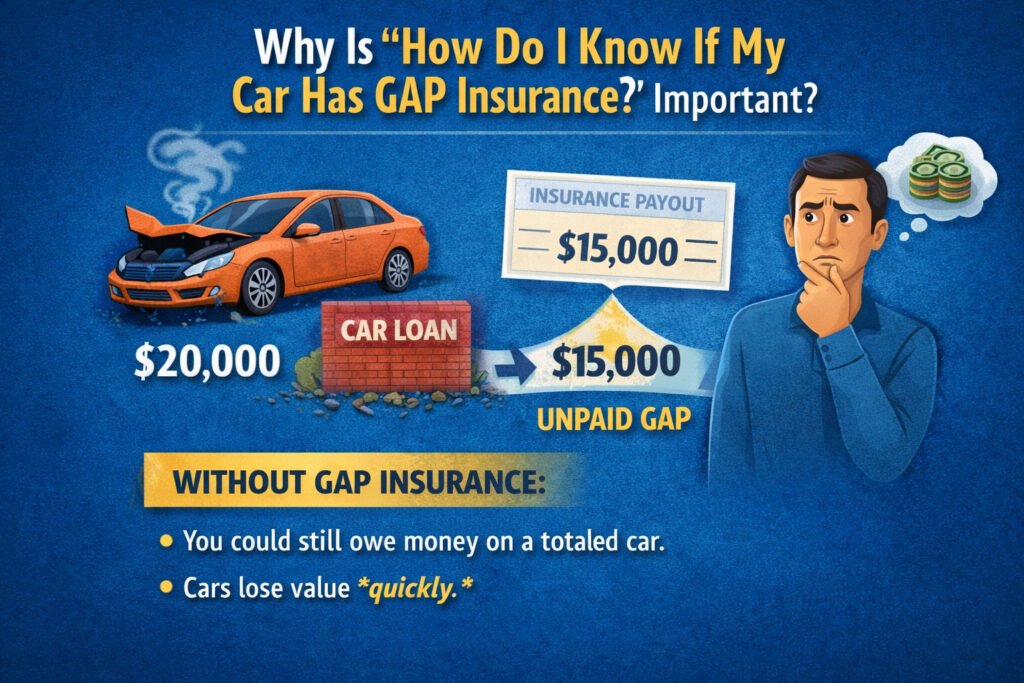
Knowing whether you have GAP insurance helps you understand your financial risk.
Here’s why it matters:
- Protects against owing money on a totaled car
- Helps avoid unexpected loan payments after loss
- Provides peace of mind during early loan years
- Helps you decide if extra coverage is needed
Many drivers assume they are covered when they are not, which can lead to surprises later.
Do you know how dose car insurence verify you adress?
Pros and cons of how do I know if my car has gap insurance
Pros
- Covers loan balance gaps after total loss
- Reduces financial burden
- Useful for new or financed vehicles
- Often affordable compared to potential loss
Cons
- Not needed once loan balance drops below car value
- May already be included without realizing it
- Adds extra cost if purchased separately
Understanding your situation helps determine whether GAP coverage makes sense.
Common mistakes people make
Beginners often misunderstand GAP insurance. Here are common issues:
- Assuming full coverage includes GAP automatically
Standard insurance usually does not include it unless added. - Forgetting dealership add-ons
Many buyers sign documents without reviewing optional coverage. - Keeping GAP insurance too long
It may not be necessary once equity builds in the car. - Not confirming with the lender or insurer
A quick phone call can prevent confusion.
Learning these points helps avoid unnecessary costs.
Frequently asked questions (FAQs)
Is GAP insurance the same as full coverage?
No. Full coverage pays vehicle value, while GAP covers the remaining loan difference.
Can I add GAP insurance later?
Yes, many insurers allow it during early loan periods.
Do leased cars include GAP insurance?
Many leases include it automatically, but you should confirm.
How long should I keep GAP insurance?
Usually until you owe less than the car’s current value.
Conclusion
Knowing whether your car has GAP insurance is an important step in understanding your financial protection as a vehicle owner. This coverage can prevent you from paying thousands of dollars out of pocket if your car is totaled while you still owe money on it.