Introduction
Getting into a car accident can turn your day upside down. One of the first questions that pops into your head is often this: Does the other driver have insurance? In the United States, every state requires drivers to carry at least basic car insurance to cover damage or injuries they cause. Yet about 15 percent of drivers—roughly one in seven—drive without it. That means millions of people on the road could leave you stuck with big repair bills or medical costs.
Finding out if someone has car insurance matters because it decides who pays for the damage. If they do have coverage, their policy usually handles your repairs, medical bills, and even lost wages. If they don’t, you might have to rely on your own insurance or pay out of pocket. This article walks you through the simplest ways to check, step by step. You’ll learn what information you need, who to contact, and what to do if the other driver won’t cooperate. Whether you’re at the scene of a fender bender or dealing with a hit-and-run later, these steps can save you time, money, and stress.
Table of Contents
Table of Contents
What Does It Mean to Find Out If Someone Has Car Insurance?
Finding out if someone has car insurance means confirming they carry an active auto policy that meets your state’s minimum requirements. Every state has laws about this “financial responsibility.” Most require liability coverage, which pays for damage or injuries you cause to others.
Car insurance isn’t just a piece of paper in the glove box. It protects against real costs:
- Repairs to your car
- Hospital bills
- Lost income if you can’t work
- Legal fees if someone sues
You might need to check in everyday situations too. Maybe a neighbor wants to borrow your car, or you’re buying a used vehicle from a stranger. But the most common time is right after a crash.
Insurance details stay private for good reason. You can’t call an insurance company and ask about a random person. Privacy laws protect everyone. That’s why you usually need a real reason—like being in an accident—to get the information through official channels.
Here are the main reasons people check:
- To file a claim with the at-fault driver’s company
- To report an uninsured motorist to the DMV
- To decide whether to use your own uninsured motorist coverage
Understanding this process helps you stay calm and get the facts you need without breaking any rules.
How Does Finding Out Someone’s Car Insurance Status Work?
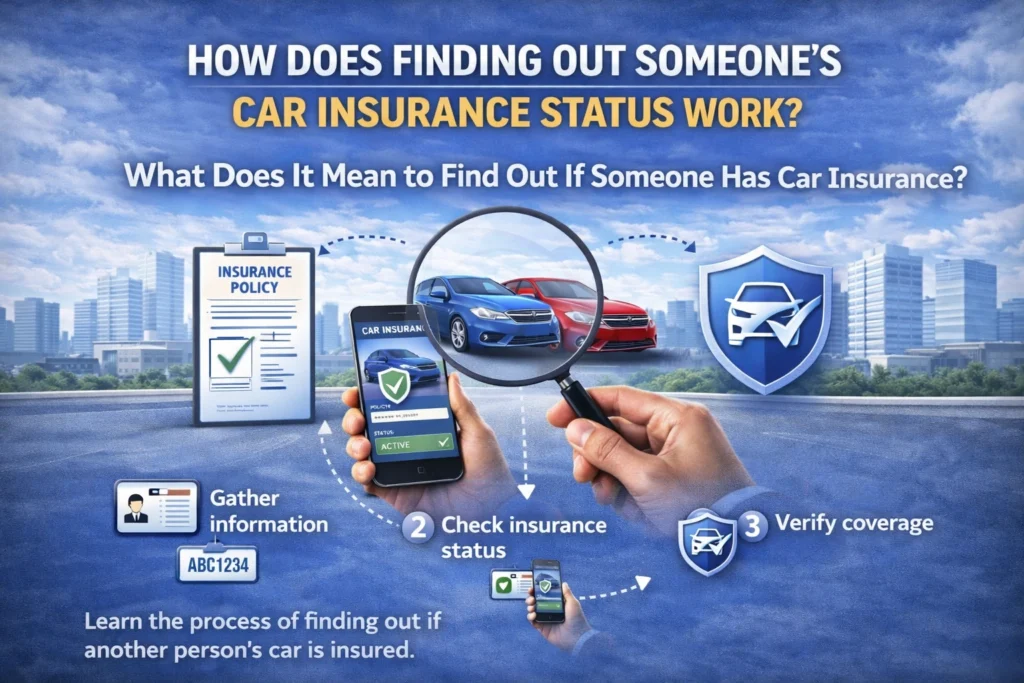
The process starts simple and gets more official if needed. You always begin at the scene, then move to police, DMV, or your insurer. Here’s how it flows, step by step.
Step 1: Ask the other driver directly. Stay calm and polite. Say something like, “Can we exchange insurance information?” Most people hand over their insurance card right away. Take a photo of both sides. Write down:
- Insurance company name
- Policy number
- Agent’s phone number
- Effective dates
Also get their name, address, driver’s license number, license plate, and vehicle make and model. This takes two minutes and solves the problem 90 percent of the time.
Step 2: Call the police if they refuse or drive away. Dial the non-emergency line. Tell them you need an accident report. Give the license plate or any details you have. Officers check insurance on the spot using their computer system. The police report almost always includes the other driver’s insurance company and policy number. Even for minor crashes, this report becomes your golden ticket.
Step 3: Contact your state’s DMV. Each state handles this differently, but the idea is the same. Bring or mail:
- Police report
- Your driver’s license
- The other vehicle’s plate number
The DMV looks in their database and tells you the insurance company name. Some states make it easy:
- New York: Use their online Records Request Navigator with the police report.
- Texas: TexasSure system (mostly for enforcement, but helps police and DMV).
- California: File form SR-19C with $20 fee.
Call your local DMV office first to ask what paperwork they need. Turnaround can be a few days to a couple weeks.
Step 4: Let your own insurance company help. Call your agent or claims line and report the accident. Give them the police report or plate number. They run a “carrier discovery” search. Insurers share data behind the scenes, so your company often finds the other policy fast. If the other driver is uninsured, they guide you to your uninsured motorist coverage.
Important notes:
- You need a legitimate reason (like an accident) for DMV or insurer help.
- Hit-and-run? Still file a police report immediately. Witnesses or security cameras help track the plate.
- Some states let law enforcement check in real time, but regular people can’t do that online for privacy reasons.
Follow these steps in order, and you’ll usually get the answer within days.
Real-Life Example
Picture this: Sarah is driving home from work in her Honda Civic. At a stoplight, a pickup truck rear-ends her. The damage looks bad—crunched bumper, smashed taillights. The truck driver jumps out, shaking. Sarah stays calm.
First, she asks for his insurance. He says he left his card at home but gives his name, John Doe, and plate number ABC-123. Sarah snaps photos of his truck, plate, and damage. She also notes the time, location, and witnesses.
John claims he’s insured but gets nervous and leaves before police arrive. Sarah calls the non-emergency line. An officer shows up 20 minutes later. The officer runs the plate, gets John’s details, and notes his insurance company (let’s say Geico) and policy number on the report.
Sarah goes home and calls her own insurer, State Farm. She emails the police report. State Farm’s claims team contacts Geico within 24 hours. Geico confirms the policy was active and accepts fault. Two weeks later, a check for $7,200 covers Sarah’s repairs and rental car.
Now imagine John had no insurance. The DMV would tell Sarah that, and she could file under her own uninsured motorist coverage (which paid $6,500 after her $500 deductible). Either way, Sarah didn’t pay thousands out of pocket because she knew exactly what to do.
This happens thousands of times a day across the country. Good notes and quick action make all the difference.
Do you know what is mean by how to find out if you are car insured
Why Is Finding Out Someone’s Car Insurance Important?
Money is the biggest reason. An average car repair after a crash costs $4,000 to $10,000. Medical bills can climb to $50,000 or more for a serious injury. If the at-fault driver has insurance, their policy pays those bills. You get your life back on track faster.
Without knowing their status, you might:
- Pay repairs yourself
- File a claim on your collision coverage and lose your deductible
- Face higher premiums if your insurer can’t recover the money
About 15 percent of drivers skip insurance. In states like Mississippi (28 percent uninsured) or New Mexico (24 percent), the risk is even higher. Checking protects you from those gaps.
It also helps the whole system. When you report uninsured drivers to the DMV, states can suspend their license or registration. That makes roads safer for everyone.
Finally, peace of mind. Knowing the facts lets you focus on healing instead of worrying about bills. It’s a small effort that can save you tens of thousands of dollars and months of stress.
you can also read How to Find out if Someone has Car Insurance
Pros and Cons of Checking Someone’s Car Insurance
Pros:
- You recover repair and medical costs quickly
- Your own premiums stay lower (insurer gets reimbursed)
- You can report truly uninsured drivers
- Police and DMV records create an official paper trail
- It works even if the other driver lies or disappears
Cons:
- Takes time—days or weeks for DMV requests
- Requires police report in most cases
- Privacy rules block casual checks (you can’t look up a stranger)
- Some states move slower than others
- If the driver cancels coverage right after the crash, you may still hit roadblocks
Overall, the pros win big if you’re the one who got hit. The hassle is worth it compared to paying huge bills alone.
Common Mistakes People Make
Nobody wants to mess this up when emotions are high. Here are the most common slip-ups—and how to avoid them.
- Forgetting to write down the license plate. People get flustered and walk away without this detail. Always snap a photo of the plate first.
- Assuming you can search online like a public record. Insurance info isn’t on Google or any free site. Trying wastes time and leads to scams.
- Not calling police for a “minor” crash. Even $1,000 in damage qualifies in most states. The report is your proof.
- Taking the insurance card at face value. Cards can be expired or fake. Always verify through official channels later.
- Waiting weeks to contact your own insurer. Policies have time limits. Report within days, even if you’re still gathering info.
Avoid these, and you’ll stay ahead of the game.
Frequently Asked Questions (FAQs)
Can I check someone’s insurance online for free? No. Privacy laws prevent public online searches for other people’s policies. Only police, DMV, or your insurer can access that data—and only with proof of an accident.
What if it’s a hit-and-run and I only have part of the plate? File a police report anyway. Officers use partial plates, vehicle color, and witnesses to track it down. Many get solved.
Will the DMV tell me everything, including policy limits? Usually just the company name and sometimes policy number. Your insurer can then request full details.
How long does it take to get the information? Police report: same day or next. DMV request: 3 days to 3 weeks, depending on state. Your insurer often finds it in 24-48 hours.
What if the other driver claims they have no insurance? Don’t argue. Note it, get the police report, and let your own company handle it. You may have uninsured motorist coverage ready to step in.
Conclusion
Checking if someone has car insurance doesn’t have to be complicated. Start by asking calmly and gathering details. Call police for an official report. Use your DMV and your own insurer as backup. These steps work in every state, even when the other driver isn’t cooperative.
The key takeaway? Act fast, document everything, and don’t assume anything. Most crashes get resolved this way, and you’ll protect your wallet and your sanity. While you’re at it, double-check your own policy has uninsured motorist coverage—it’s cheap peace of mind against that 15 percent of drivers who skip out. Stay safe out there, and you’ll know exactly what to do next time metal meets metal.